
Ethology Institute

Knowledge to Everyone Everywhere
Animal Behavior and Learning
Animal Behavior. Animal Training. Dog Training. Single Online Courses. Certification Programs. Videos and Articles.
Free online course.
Animal Behavior and Learning
select a course
Two Easy Steps
STEP 1: Register a Free Account
As a registered user, you have free access to study resources that are not available to visitors. You also need to register to buy courses, programs or book subscriptions.
STEP 2: Select a Course
Once you have created an account, you can enroll in your favorite course or program. Take the course, one lesson at the time, pass the quizzes and earn your certificate.
Start Your Studies Today

Ethology Institute offers you 28 high-quality online courses at amazingly low fees, and two free courses (we invite you to check the internet for comparable programs before you enroll in any of our courses).
Browse through our course catalog.
Our ‘Certified Professional Dog Trainer’ is probably the best and cheapest program of its kind. 12 online courses and one video proficiency verification. One-on-one tutor support for the practical work. Earn redeem points for completing courses. Try it today.
Certified Professional Dog Trainer (CPDT) EUR 1,419 (or 12 installments of EUR 126)
19 online courses including two video Proficiency Verifications. Go a step further than CPDT. Learn about ethology, applied animal learning, agonistic behavior, canine scent detection. One-on-one tutor support for the practical work. This is the ultimate program for dog trainers.
Certified in Applied Canine Ethology (CACE) EUR 2,496 (or 18 installments of EUR 148)
Online, self-study program for you, who wish to be a top professional with a solid theoretical knowledge and a vast experience in training different animals.
27 online courses including four video Proficiency Verifications. One-on-one tutor support for the practical work.
Certified in Advanced Applied Ethology (CAAE) EUR 4,116 (or 24 installments of EUR 184)

Daybook is Ethology Institute’s virtual campus where students and tutors meet and discuss topics of interest.
Join daybook now so we can communicate with you and you can particpate in exciting debates with your tutors and fellow students.
How was Michael's students meeting? What was discussed? Hoping it's also next month because I couldn't make it yesterday....
Read moreHi everyone! I am back after a long hiaitus. Many events occurred that required my full attention. Now I am ready and excited to continue and complete my CPDT Certification through The Ethology Instit...
Read more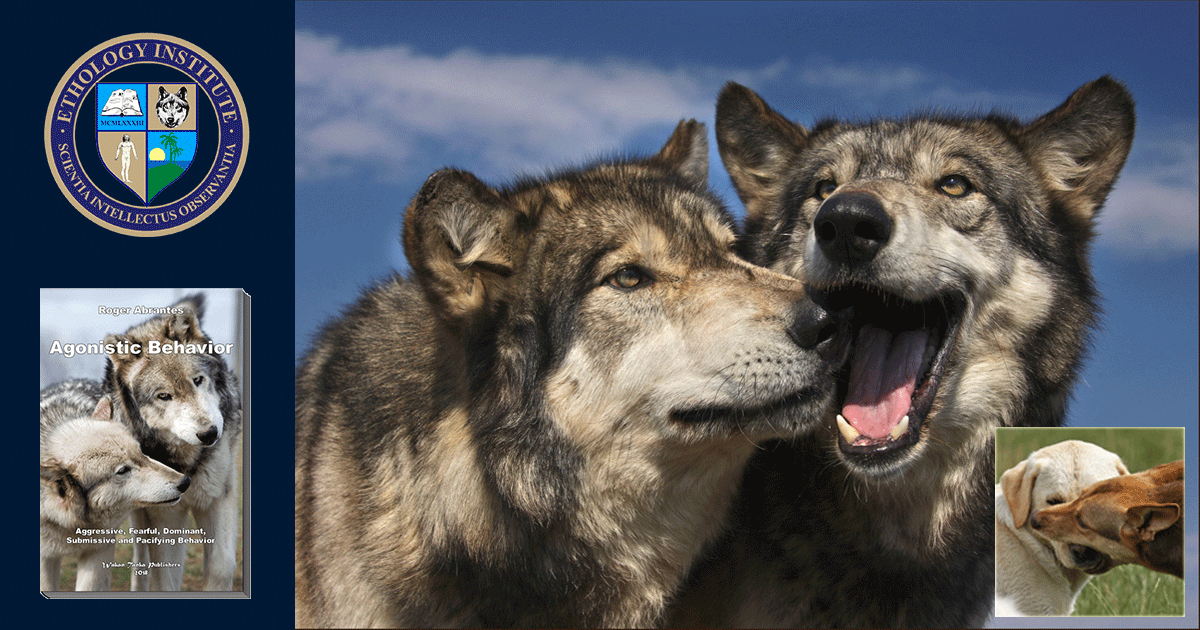
Featured Course of the Week
“Agonistic Behavior” explains all forms of aggression, threat, fear, pacifying, fight, or flight among conspecifics. Do you want to know the real meaning and function of dominant and submissive behavior? This course gives you scientific definitions and facts. It is an essential course for all dedicated behavioral sciences students.
Take our online featured course of the week and earn a certificate—for only €98 until Sunday midnight GMT.
Start TODAY!
Featured Price: 168.00 €98.00

Live Online
You can attend our LIVE ONLINE events and ask any questions you like. If you’re a student, meet your tutors and participate in lively conversations regarding animal behavior and training.
Coming events LIVE ONLINE:
📆 Apr 04: Meet Your Tutors (for students only)
📆 Apr 11: Tilde’s Students Meeting (for students only)
📆 Apr 17: Study Group (for students only)
📆 Apr 25: Tilde’s Students Meeting (for students only)
Watch this section for coming LIVE ONLINE events.
Click the button below to register for an event.

Apply for a Fair Price Grant
We’ve taken our principle “knowledge to everyone, everywhere” to a new level.
Students from poorer countries are unable to pay the same study fees as their counterparts from affluent countries. The Fair Price Grant we now offer all year around rectifies that. We consider a student’s country of residence’s local purchasing power index and may fund up to 80% of the listed study fees.
So, browse through our website, pick the curriculum of your dreams, and apply for a Fair Price Grant.
Go for it—do it today!
“After attending a seminar by Professor Abrantes, I took my first free course (Evolution). I liked it so much that I enrolled in the next course—and then I couldn’t stop. I finished my CPDT, CACE and finally earned my CAAE diploma of which I’m very proud. Today, I have a good business helping dogs and their owners to a better life. That was my dream!
~Claudia Chiappini, CAAE, Rome, Italy.
Yes, we pay you to study!
We reward our good students. You earn points for each course and program you complete. When you graduate as a CAAE, if you have saved all your redeeming points, we pay you EUR 527 (almost 600 USD) – an excellent way to start your career.